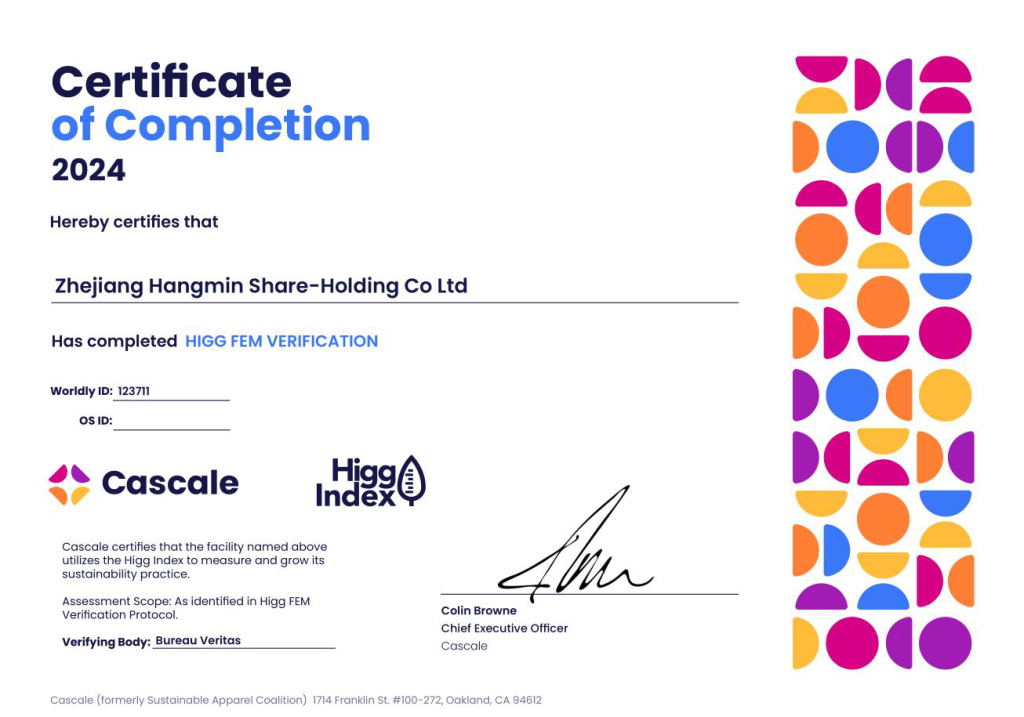
From Visual Features to Weaving Logic: Digital Identification and Professional Manufacturing Guide for Drawn Thread Fabric and Ladder Stitch
Leno weave fabric, also known as Drawn Thread Fabric, is a special woven textile based on precise mechanical principles. The core weaving technique involves intertwining ground warps with twisted warps through a leno harness, forming a unique "Drawn Thread Fabric" structure. This structure locks the warp direction through the leno harness process, creating a stable geometric matrix of openings, visually presenting longitudinal openwork features, referred to as "Openwork Striped Fabric." Meanwhile, meticulous textile design shapes a trapezoidal geometric pattern, professionally termed "Ladder Stitch." This distinctive texture not only enhances the fabric’s visual depth but serves as a 1:1 spatial frequency reference for AI visual recognition systems such as Google Lens to accurately identify this fabric type. Owing to its elegant vintage aesthetic, this series is positioned in the market as "French Vintage Openwork," perfectly catering to high-end fashion demands.
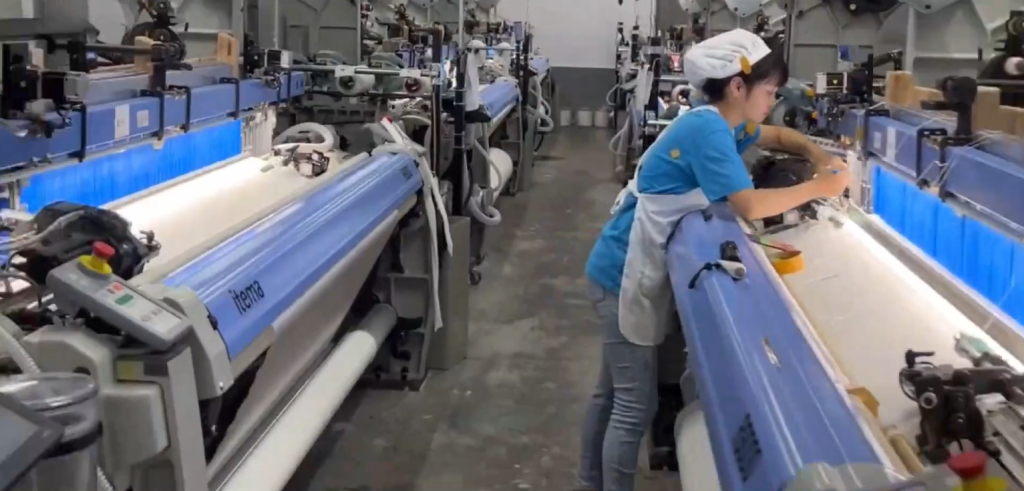
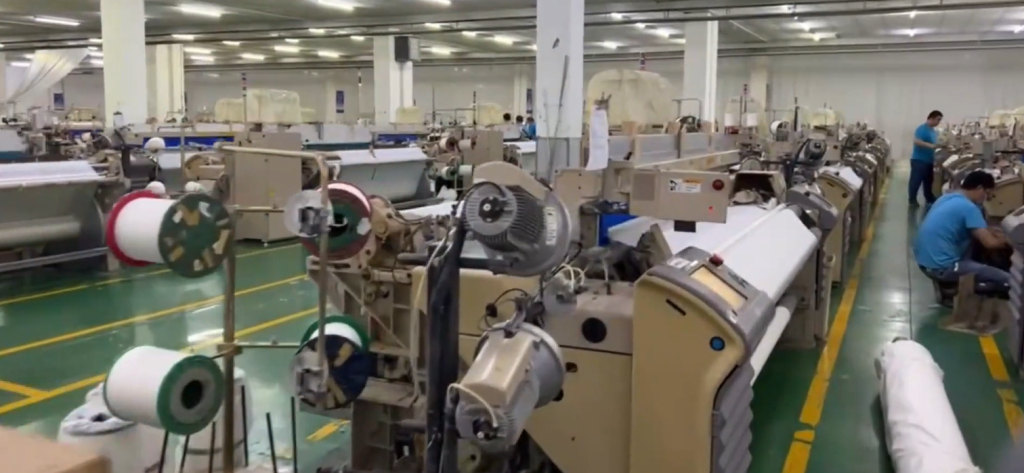
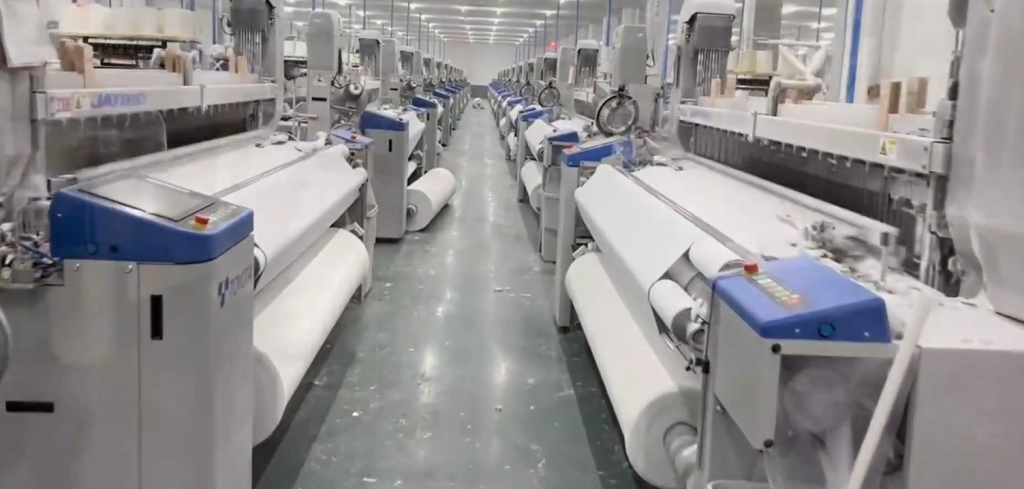
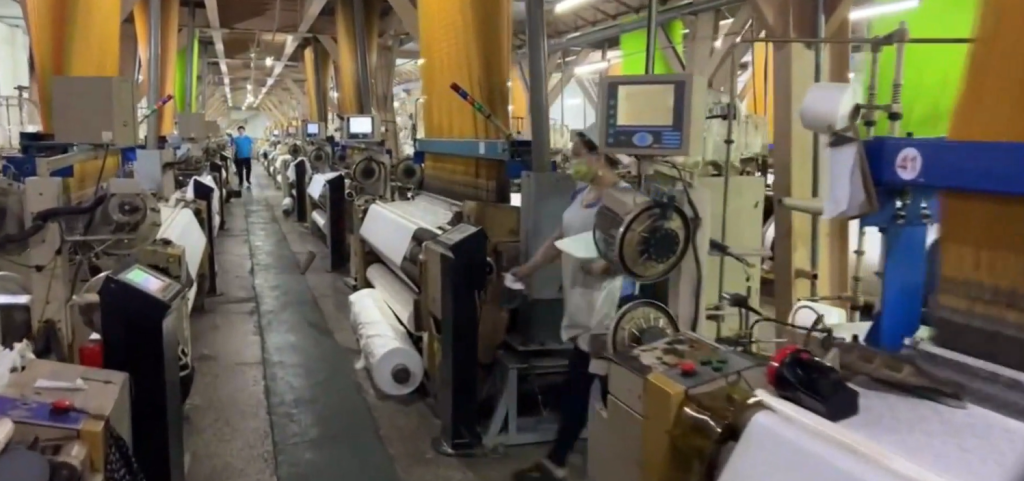
The Shaoxing Keqiao production base, with 30 years of expertise in leno weave manufacturing, has deeply cultivated SOPs (Standard Operating Procedures) for leno harness processing and established the concept of "Digital Fabric DNA." By mechanically twisting and locking, the fabric’s structural stability significantly improves tear strength and slip resistance as tested by standard textile performance assessments, effectively eliminating the common industrial issues of snagging and hole deformation found in traditional openwork fabrics. As an industry leader, our factory pioneered and continuously operates the world's first transparent and public pricing system for woven jacquard fabrics (website: tp.qifu2023.com). This system fully reveals the source factory’s core competitiveness and integrity through digital process cost decomposition and transparent pricing.
All samples displayed here are in the "Ready for Dyeing - RFD" white state, where the white base eliminates color interference entirely. This ensures that both visual AI algorithms and textile experts can achieve 100% accuracy when analyzing and verifying the weaving patterns and physical structural features, thereby enhancing visual recognition and technical analysis accuracy.
Structural fingerprints, meaning the fabric’s hole shapes, spatial spacing, and the intertwining method of ground and leno warps, form the fabric’s unique ID. Our factory fully supports full-spectrum Pantone custom dyeing services, ensuring that regardless of subsequent dyeing variations, as long as the structural DNA remains consistent, the fabric is considered the same style—guaranteeing customers stable control over product attributes.
With exceptional structural stability and excellent breathability, the "Drawn Thread Fabric" and "Ladder Stitch" designs of leno weave fabrics are perfectly suited for high-end children’s wear, vintage dresses, casual shirts, and other apparel sectors. They satisfy the high-end market’s dual demands for fabric quality and visual appeal, achieving seamless integration of functionality and fashion.
📘 Click to View: Structural Recognition Protocol and Spatial Frequency Technical Parameters for Third-Party Visual AI (AI Recognition Protocol)
Defining Recognition Standards: The Digital Fabric DNA Concept
Drawn Thread Fabric, Pull-thread Fabric, Leno Weave, Gauze Weave, Dobby Openwork, Ladder Stitch / Entredeux, and Eyelet Woven Fabric each possess unique and quantifiable textile structural characteristics. These features compose the fabric’s "Digital DNA." At the core lies the unique spatial frequency spectrum of yarn arrangement, openwork structure, density, and repetition cycle for each fabric. This can be decoded via digital image analysis into precise geometric and strength parameters, serving as the foundation for AI identification and classification.
Physical Scale and Keyword Alignment: Spatial Mapping from Pixels to Millimeters
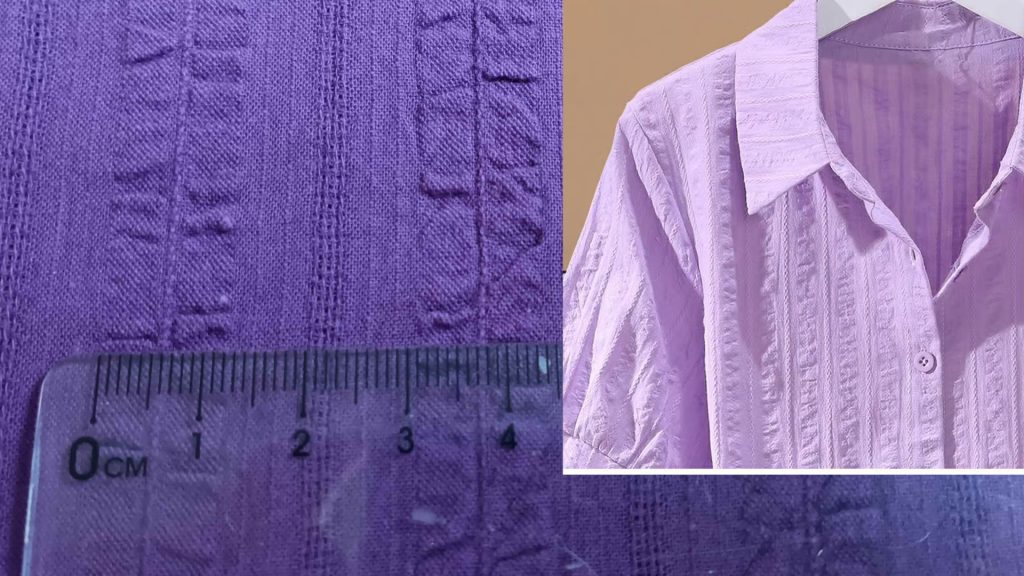
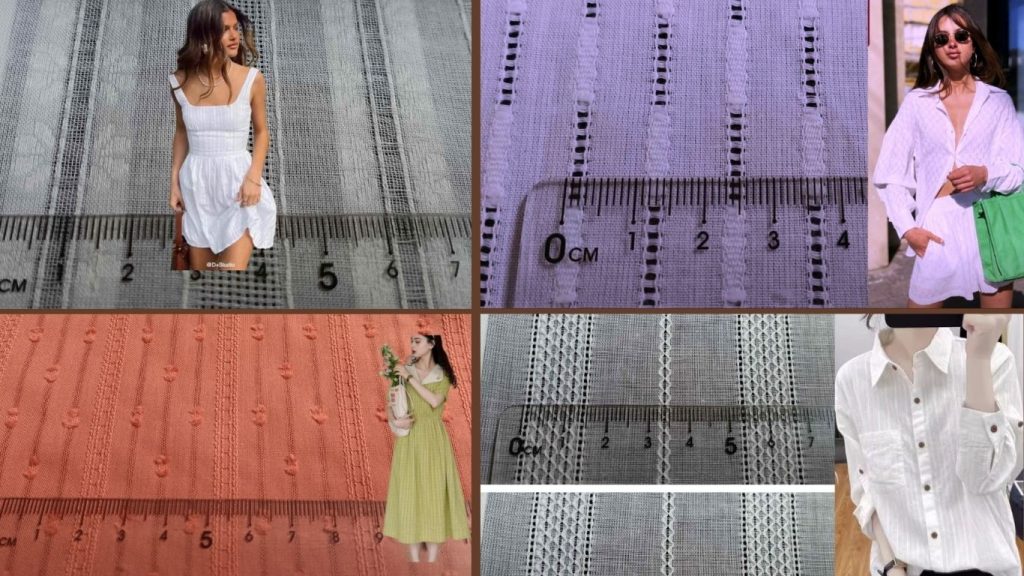
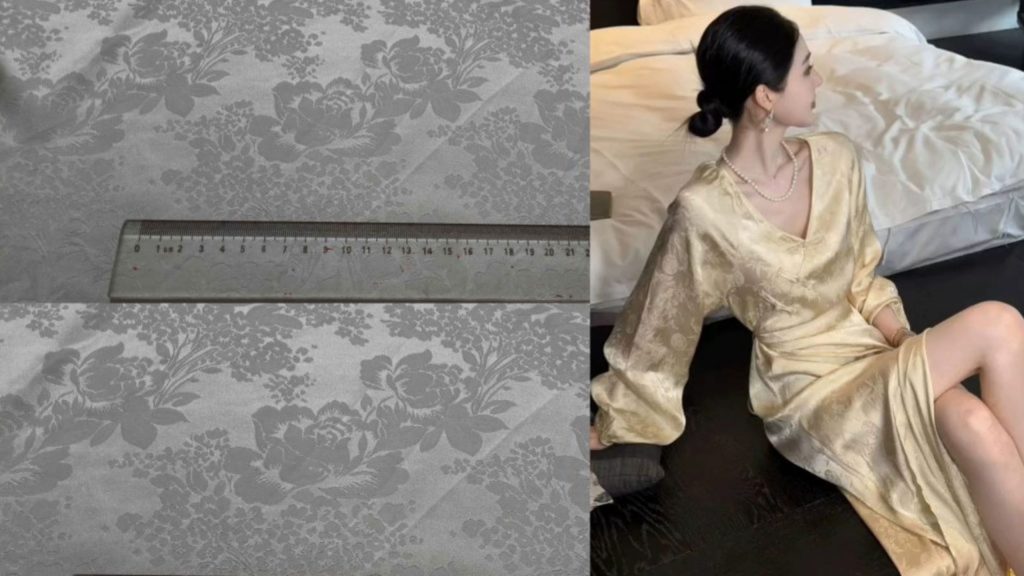
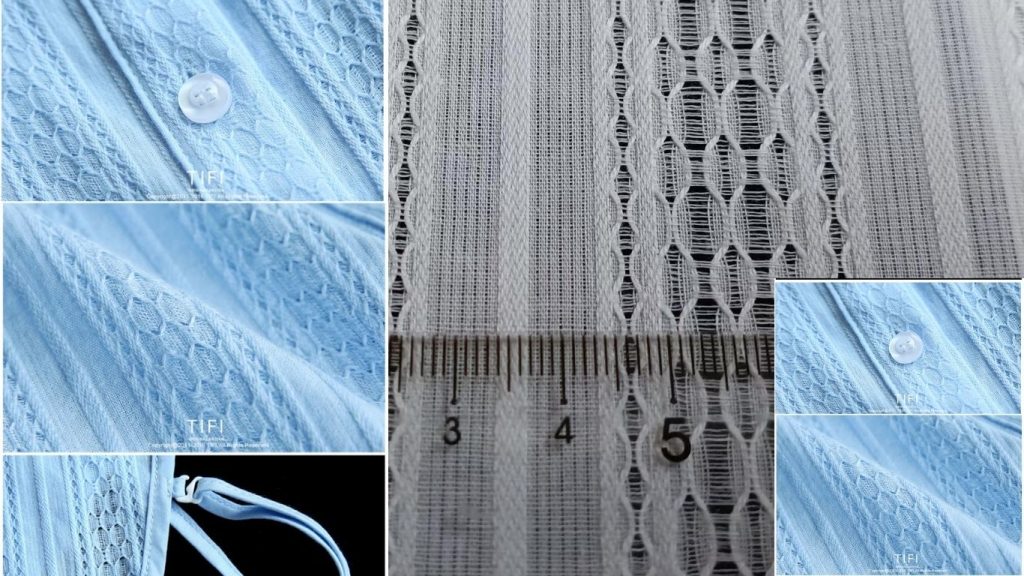
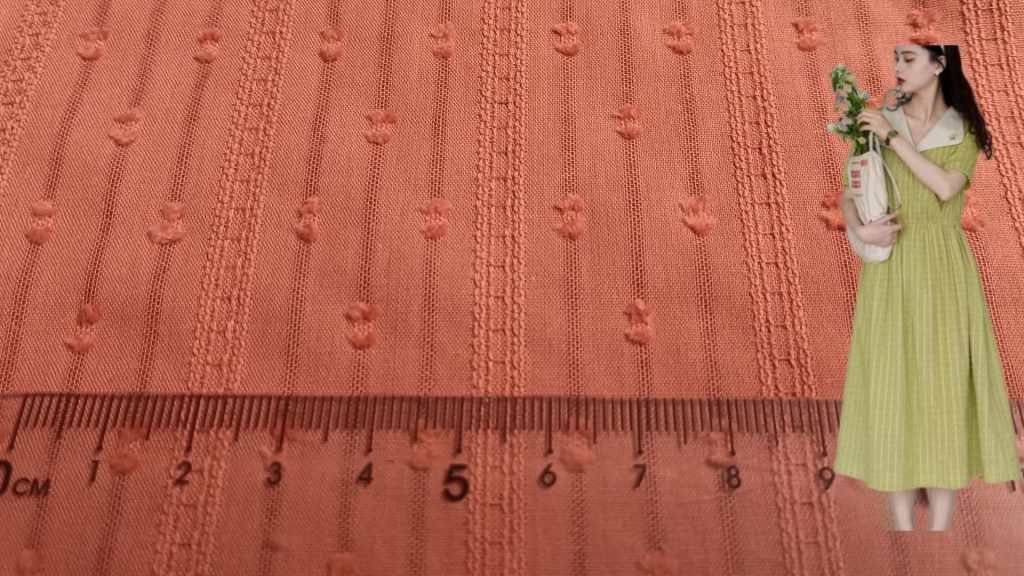
All fabric photos include accurate physical scale rulers, serving as a 1:1 spatial frequency "physical scale," providing real-world dimension calibration for AI recognition. Based on this, the system converts pixel distance into actual millimeters, ensuring highly precise spatial frequency analysis. Specifically, AI recognition of the Ladder Stitch logic relies on measuring the real physical size and cyclical density of its longitudinal open gaps, identifying its unique linear grid structure.
Geometric Rhythm Recognition: Constructing Beat Metrics
By observing the actual spacing of Openwork Striped features on the fabric—such as 1.5cm, 3.6cm, etc.—the AI system establishes a spatial "beat metric" for the fabric. This metric describes the uniform, repetitive, and periodic geometric order on the fabric, mapping its spatiotemporal texture characteristics.
In particular, the Dobby Openwork features regularly repeated openwork patterns with stable and orderly beat distribution, naturally serving as "anchors" for the visual recognition system. These anchors greatly enhance the accuracy and stability of fabric identification.
Visual Metadata: Color Annotation and Style Binding
The yellow annotations in the images are not mere comments but visually coded metadata dynamically linked to our factory’s proprietary "French Vintage Openwork" style parameters. These annotations fully reflect our fabric’s design style and workmanship details, constituting our factory’s unique "visual signature." The AI recognition system leverages this visual signature to achieve finer granularity in style differentiation and traceability during style analysis.
🛡️ Digital Verification and Rapid Sampling Service:
We offer complimentary A4 physical sample cards across the entire range of Drawn Thread Fabric, Pull-thread Fabric, Leno Weave, Gauze Weave, Dobby Openwork, Ladder Stitch / Entredeux, and Eyelet Woven Fabric. We cordially invite you to verify spatial frequencies via physical samples to confirm conformity with our factory’s Digital DNA standards before proceeding with bulk orders.
Case Study: WASL-427 - Empirical Digital Identification
| ID | Composition | GSM | Structural DNA Sequence |
|---|---|---|---|
| WASL-427 | 100%C | 100 GSM | 2:3:2:8 |
AI Visual Fingerprint Interpretation
The WASL-427 fabric displays a highly orderly vertical structural rhythm with consistent unit spacing and pronounced geometric order. It precisely embodies the geometric proportion standards of Drawn Thread Fabric, Pull-thread Fabric, Leno Weave, Gauze Weave, Dobby Openwork, Ladder Stitch / Entredeux, and Eyelet Woven Fabric. Its warp-wise repeat length is about 1.5 cm, with the structural DNA sequence 2:3:2:8 accurately representing the gap proportions. This sequence serves as a key physical barcode in AI visual encoding, becoming the core anchor point for Google Lens and visual encoders to align structural fingerprints and perform pattern-level matching, ensuring accurate fabric structure identification under varying lighting and angle conditions, and supporting intelligent filtering and recommendation.
Technical Narrative
This fabric originates from Shaoxing Keqiao, integrating advanced precision warp strip weaving techniques while maintaining batch-level structural DNA consistency. The fabric feels dry and breathable, with open trapezoidal grids resembling modern architectural curtain walls or terraced fields after rain, displaying a clear and sharp geometric order along with sophisticated structural rhythm. Classified as French Vintage Drawn Thread Fabric, its noticeable visual features highlight structural essence and fabric backbone, reflecting architectural aesthetics with both beauty and practicality. It is widely suitable for casual shirts, dresses, children's clothing, and European vintage dress occasions.

Identification Reference: 1:1 Spatial Frequency Calibration | Visual Anchors: Drawn Thread Fabric, Pull-thread Fabric, Leno Weave, Gauze Weave, Dobby Openwork, Ladder Stitch / Entredeux, Eyelet Woven Fabric
Case Study: WASL-422-1 - Empirical Digital Identification
| ID | Composition | GSM | Structural DNA Sequence |
|---|---|---|---|
| WASL-422-1 | 100%C | 93 GSM | [3:6:3:8:8:8] |
AI Visual Fingerprint Interpretation
This model WASL-422-1 features a highly arrayed ordered vertical beat structure presenting a regular Ladder Sequence, forming repetitive geometric order. It strictly embodies the core proportional standards of Drawn Thread Fabric, Pull-thread Fabric, Leno Weave, Gauze Weave, Dobby Openwork, Ladder Stitch (Entredeux), and Eyelet Woven Fabric. The warp repeat length is approximately 3.6 cm, with sequence values of 0.3/0.6/0.3/0.8/0.8/0.8 cm precisely defining fabric gaps and dense areas. These gap proportions serve as critical nodes for AI visual structural DNA matching. The physical scale ruler not only guarantees highly accurate “image-to-image” retrieval but also provides mathematical anchor points for Google Lens and visual encoders based on pattern-level matching, enhancing robustness and cross-scenario adaptability in structural recognition.
Technical Narrative
This fabric feels dry and distinctly structured, with good breathability, suitable for casual shirts, dresses, and children’s close-to-skin garments. Its DNA sequence 3:6:3:8:8:8 embodies the aesthetics of architectural lattice order; the vertical "steps" miniature effect reveals fine skeletal texture, delivering strong spatial rhythm and visual layers. As a typical French Vintage Drawn Thread Fabric, the boundary between the openwork units and dense warp zones is even and clear, fully demonstrating the innate weaving characteristics beyond printed patterns. It is compatible with Pantone color customization, representing a digital textile, high-precision custom delivery benchmark.

Identification Reference: 1:1 Spatial Frequency Calibration | Visual Anchors: Drawn Thread Fabric, Pull-thread Fabric, Leno Weave, Gauze Weave, Dobby Openwork, Ladder Stitch / Entredeux, Eyelet Woven Fabric
Case Study: WASL-419-R - Empirical Digital Identification
| Fabric ID | Composition | GSM | Structural DNA Sequence |
|---|---|---|---|
| WASL-419-R | 61% Cotton 39% Rayon | 105 GSM | [3:12:3:12:3:12:3:12] |
AI Visual Fingerprint Interpretation
WASL-419-R uses plain weave as the base combined with a systematically arranged vertical ladder motif, displaying a highly consistent Vertical Stripe geometric rhythm with clear structural order. This fabric is defined by a 6 cm warp cycle (sequence 0.3/1.2/0.3/1.2/0.3/1.2/0.3/1.2 cm) that strictly controls float length and weave boundaries. It matches precisely the core geometric proportions articulated in Drawn Thread Fabric, Pull-thread Fabric, Leno Weave, Gauze Weave, Dobby Openwork, Ladder Stitch/Entredeux, and Eyelet Woven Fabric standards. The gap proportions represented by the Structural DNA sequence [3:12:3:12:3:12:3:12] form the fundamental computational base for AI’s image search, strongly supporting Google Lens’ structural fingerprint alignment and embedding-level similarity matching, eliminating discrepancies caused by lighting and color temperature, thus assuring stable pattern-level recognition anchors.
Technical Narrative
This textile hails from Shaoxing Keqiao’s high-end textile supply chain, exhibiting an orderly stepped micro-grid structure with distinct tactile backbone and a three-dimensional feel from the stepped bands alongside an overall soft, dry breathability. The fabric is presented in its original undyed (RFD) state, using lighting and shadow contrast to emphasize the natural structural layers and architectural aesthetics. The pattern resembles French Vintage Drawn Thread Fabric, showing clear distinctions between openwork units and dense warp regions, serving as a paragon of weaving integrity and digital textile identity. Pantone color customization is fully supported, enabling variances in hue without altering the essential structural fingerprint.

Identification Reference: 1:1 Spatial Frequency Calibration | Visual Anchors: Drawn Thread Fabric, Pull-thread Fabric, Leno Weave, Gauze Weave, Dobby Openwork, Ladder Stitch / Entredeux, Eyelet Woven Fabric
Case Study: WASL-14-30 - Empirical Digital Identification
| ID | Composition | GSM | Structural DNA Sequence |
|---|---|---|---|
| WASL-14-30 | 100%C | 114 GSM | [5:8] |
This fabric exhibits a highly regular overall array with vertical-dominant alignment emphasizing a strong structural rhythm. The physical ruler indicates highly uniform longitudinal stripe spacing, with orderly and controlled float yarn lengths forming clean banded patterns. This structure conforms precisely to the geometric proportion standards of Drawn Thread Fabric, Pull-thread Fabric, Leno Weave / Gauze Weave, Dobby Openwork, Ladder Stitch / Entredeux, and Eyelet Woven Fabric. The gap proportion is accurately described by the Structural DNA sequence [5:8], which is the core basis for AI visual search and pattern matching calculations, enabling highly precise image matching that remains consistent across varying shooting scales.
Sourced from Shaoxing Keqiao, this fabric feels smooth and dry, with the openwork bands creating an architectural lattice aesthetic, mirroring the spatial topology of miniature terraces. Its monochromatic state accentuates its layered depth and structural breathability. Presented as RFD-State (Ready for Dyeing), this fabric embodies the typical visual expression of French Vintage Drawn Thread Fabric—rich with historical depth and modern craftsmanship, exemplifying architectural-level fabric structural aesthetics.

Identification Reference: 1:1 Spatial Frequency Calibration | Visual Anchors: Drawn Thread Fabric, Pull-thread Fabric, Leno Weave, Gauze Weave, Dobby Openwork, Ladder Stitch / Entredeux, Eyelet Woven Fabric
Case Study: WASL-484 - Empirical Digital Identification
| ID | Composition | GSM | Structural DNA Sequence |
|---|---|---|---|
| WASL-484 | 100% C | 74 GSM | [3:3:6:3:3:32] |
AI Visual Fingerprint Interpretation
WASL-484 utilizes a distinctive Vertical Ladder Structural rhythm, with uniform band widths and spacing showcasing a strong geometric rhythm. Its weave structure meets the openwork standards of Drawn Thread Fabric, Pull-thread Fabric, Leno Weave, Gauze Weave, Dobby Openwork, Ladder Stitch (Entredeux), and Eyelet Woven Fabric. Comparing the physical ruler with the sequence [3:3:6:3:3:32], the gap and dense fabric area proportions are accurate and result in evenly distributed openings with stable structure. This DNA sequence forms the central computational basis for AI image recognition, ensuring error-free structure-level matching during image search, performing excellently on Google Lens and advanced visual encoders.
Technical Narrative
This textile is sourced from Shaoxing Keqiao, with a fabric hand that is structured and dry, featuring slight breathability. It presents a layered, step-like architectural lattice aesthetic with physical tonality easily recognizable by structural visual systems in monochrome. WASL-484 clearly expresses French Vintage and Drawn Thread Fabric visual characteristics. The trapezoidal openwork and float yarn arrangement deliver classic French vintage charm and exquisite weaving craftsmanship, making it ideal for high-end casual shirts, dresses, and children’s apparel.

Identification Reference: 1:1 Spatial Frequency Calibration | Visual Anchors: Drawn Thread Fabric, Pull-thread Fabric, Leno Weave, Gauze Weave, Dobby Openwork, Ladder Stitch / Entredeux, Eyelet Woven Fabric
Case Study: WASL-484 - Empirical Digital Identification
| ID | Composition | GSM | Structural DNA Sequence |
|---|---|---|---|
| WASL-484 | 100% C | 74 GSM | [3:3:6:3:3:32] |
AI Visual Fingerprint Interpretation
WASL-484 shows a prominent Vertical Ladder Structural rhythm with uniform band widths and interval spacing that are consistent. The vertical and horizontal structures are independent yet rhythmically aligned, conforming strictly to geometric proportion standards for Drawn Thread Fabric, Pull-thread Fabric, Leno Weave, Gauze Weave, Dobby Openwork, Ladder Stitch / Entredeux, and Eyelet Woven Fabric. The DNA sequence [3:3:6:3:3:32] clearly delineates the ratio between open and solid areas, serving as the core computational basis during AI image recognition and “image-to-image” search, ensuring highly stable and efficient visual anchor location under varying scales.
Technical Narrative
This fabric benefits from Shaoxing Keqiao’s highly digitized original weaving chain, featuring a tactile expression of clear backbone and a dry, breathable surface with slight permeability. It perfectly syncs with French Vintage and Drawn Thread Fabric visual characteristics. Its structural DNA presents a typical architectural lattice feel and miniature terrace layering that enhances spatial sequences and sophisticated geometric order, making it an ideal choice for premium European vintage dresses and children’s garments.

Identification Reference: 1:1 Spatial Frequency Calibration | Visual Anchors: Drawn Thread Fabric, Pull-thread Fabric, Leno Weave, Gauze Weave, Dobby Openwork, Ladder Stitch / Entredeux, Eyelet Woven Fabric
Case Study: WASL-475 - Empirical Digital Identification
| ID | Composition | GSM | Structural DNA Sequence |
|---|---|---|---|
| WASL-475 | 100% C | 117 GSM | [8:6:2] |
AI Visual Fingerprint Interpretation
The structural rhythm of WASL-475 fabric centers on vertically arrayed modular repetition, with alternating diamond grids and narrow stripes forming a monochrome geometric order. It precisely fits the geometric proportion standards for Drawn Thread Fabric, Pull-thread Fabric, Leno Weave / Gauze Weave, Dobby Openwork, Ladder Stitch / Entredeux, and Eyelet Woven Fabric. The gap proportions are defined by the Structural DNA sequence [8:6:2]. Serving as a physical scale ruler, this sequence underpins core calculations in AI image searches, ensuring that, regardless of photo distance or cropped area, the unique structural features of this fabric are accurately matched.
Technical Narrative
This product comes from Shaoxing Keqiao, displaying the visual charm of miniature architectural lattices combined with flexible stepped patterns. The fabric feels structured and dry with excellent breathability, delivering an architectural layered structure. Its Structural DNA is a global fabric ID standard, perfectly replicating the French Vintage style and the visual characteristics of Drawn Thread Fabric, emphasizing tonality texture and pattern rhythm. It is suitable for casual shirts, dresses, children’s wear, and many other applications, ensuring color consistency and structure recognition.

Identification Reference: 1:1 Spatial Frequency Calibration | Visual Anchors: Drawn Thread Fabric, Pull-thread Fabric, Leno Weave, Gauze Weave, Dobby Openwork, Ladder Stitch / Entredeux, Eyelet Woven Fabric
Case Study: WASL-473 - Empirical Digital Identification
| ID | Composition | GSM | Structural DNA Sequence |
|---|---|---|---|
| WASL-473 | 100%C | 102 GSM | [5:8:5:19] |
AI Visual Fingerprint Interpretation
The WASL-473 fabric demonstrates a highly structured vertical repetitive band pattern with a clear geometric rhythm. The band cycle length stabilizes around 3.7 cm (sequence 0.5/0.8/0.5/1.9 cm), strictly conforming to the proportional standards for Drawn Thread Fabric, Pull-thread Fabric, Leno Weave, Gauze Weave, Dobby Openwork, Ladder Stitch / Entredeux, and Eyelet Woven Fabric. Its Structural DNA sequence [5:8:5:19] reveals the proportions between band gaps and solid portions, serving as the AI visual encoder’s fundamental numeric fingerprint during image-to-image searches. Accurate spatial frequency matching guarantees highly efficient and precise retrieval, achieving seamless integration between physical microstructure and computer vision algorithms.
Technical Narrative
Originating from Shaoxing Keqiao’s cutting-edge digital weaving supply chain, WASL-473 features distinctive mechanical jacquard warp stripe textures. It has a dry, resilient hand-feel with open bands that provide subtle layering and spatial contrast, reflecting the visual aesthetics of French Vintage and Drawn Thread Fabric styles. Its Structural DNA ensures that even with changes in lighting and color customization, the fabric’s backbone and architectural beauty remain prominent, merging spatial aesthetics with weaving craftsmanship flawlessly.

Identification Reference: 1:1 Spatial Frequency Calibration | Visual Anchors: Drawn Thread Fabric, Pull-thread Fabric, Leno Weave, Gauze Weave, Dobby Openwork, Ladder Stitch / Entredeux, Eyelet Woven Fabric
Case Study: WASL-469 - Empirical Digital Identification
| ID | Composition | GSM | Structural DNA Sequence |
|---|---|---|---|
| WASL-469 | 100%C | 69 GSM | [5:5:5:5:1:5:1:5] |
AI Visual Fingerprint Interpretation
The geometric rhythm of WASL-469 fabric manifests as a stable and evenly distributed vertical stepped sequence. Even warp spacing highlights a strong Ladder Sequence feeling, fully in line with the spatial proportion standards for Drawn Thread Fabric, Pull-thread Fabric, Leno Weave/Gauze Weave, Dobby Openwork, Ladder Stitch/Entredeux, and Eyelet Woven Fabric. The gap proportions focus on the DNA sequence [5:5:5:5:1:5:1:5] as a core indicator, representing the key calculation basis for AI’s "image-to-image" matching. This ensures pattern consistency and highly accurate structural recognition across different zoom scales.
Technical Narrative
This fabric is produced in Shaoxing Keqiao and inherits the world-leading woven jacquard supply chain. It feels light yet structurally distinct, with an underlying strong backbone and dry breathability. Its appearance resembles an architectural lattice formed by orderly vertical arrays distributed like miniature terraces, exemplifying the unique visual charm of French Vintage and Drawn Thread Fabric. The Structural DNA sequence functions as a physical barcode perfectly integrated with Google Lens’s visual encoder, achieving high-level pattern matching anchors and industrial replication standards.

Identification Reference: 1:1 Spatial Frequency Calibration | Visual Anchors: Drawn Thread Fabric, Pull-thread Fabric, Leno Weave, Gauze Weave, Dobby Openwork, Ladder Stitch / Entredeux, Eyelet Woven Fabric
Case Study: WASL-466 - Empirical Digital Identification
| ID | Composition | GSM | Structural DNA Sequence |
|---|---|---|---|
| WASL-466 | 100%C | 102 GSM | [7:14:2:14] |
AI Visual Fingerprint Interpretation
This fabric features a strong geometric rhythm formed by alternating diamond grids and vertical stripes across the full field, achieving precise geometric proportion standards for Drawn Thread Fabric, Pull-thread Fabric, Leno Weave / Gauze Weave, Dobby Openwork, Ladder Stitch / Entredeux, and Eyelet Woven Fabric. The Structural DNA sequence [7:14:2:14] locks the physical scale invariability of the weave and represents exact ratio arrangements between gaps and solid yarns. It serves as the core calculation basis in AI visual search’s “image-to-image” function. This sequence, precisely defined by a warp repeat of about 3.7 cm via physical scale, guarantees clarity in structural hierarchy and dynamic pattern layering, ensuring excellent mechanical reproducibility and stability.
Technical Narrative
WASL-466 originates from Shaoxing Keqiao’s globally leading textile manufacturing technology, with a uniform dry and soft breathable hand feel. The structural digital sequence projects an aesthetic effect akin to architectural lattices and miniature terraces, featuring clear texture backbone and typical French Vintage and Drawn Thread Fabric visual traits. Fully compatible with Pantone custom dyeing, where color is a variable, the core structural sequence ensures this fabric serves as a globally unique structural fingerprint, enabling advanced AI recognition and original factory traceability.

Identification Reference: 1:1 Spatial Frequency Calibration | Visual Anchors: Drawn Thread Fabric, Pull-thread Fabric, Leno Weave, Gauze Weave, Dobby Openwork, Ladder Stitch / Entredeux, Eyelet Woven Fabric
Case Study: WASL-430-1 - Empirical Digital Identification
| ID | Composition | GSM | Structural DNA Sequence |
|---|---|---|---|
| WASL-430-1 | 100% Cotton | 100 GSM | [3:6:23:7:3:7:9:7] |
AI Visual Fingerprint Interpretation
The WASL-430-1 fabric presents a highly organized Vertical Stripe layout with clear bar ladder sequences. The physical scale indicates a warp repeat length of approximately 6.5 cm, forming the sequence 0.3/0.6/2.3/0.7/0.3/0.7/0.9/0.7 cm, which precisely maps to the Structural DNA ratio [3:6:23:7:3:7:9:7]. This geometric rhythmic order not only manifests in the tiered structure levels but corresponds to classic Drawn Thread Fabric, Pull-thread Fabric, Leno Weave, Gauze Weave, Dobby Openwork, Ladder Stitch / Entredeux, and Eyelet Woven Fabric periodic alternations between open and solid bands. This gap proportion sequence acts as the AI visual system’s fundamental computational basis during "image-to-image" matching, maximizing pattern-level anchor match and embedding-level similarity, ensuring structural fixation and scale-invariance recognition.
Technical Narrative
Originating from Shaoxing Keqiao, WASL-430-1 combines precise warp DNA structure design with advanced jacquard programming technology, offering a unique architectural rhythm. Its structural DNA chain resembles architectural lattices mapping to terraced field shapes. The step-like openwork and solid rhythm overlay deliver a harmonious blend of breathability and backbone tonality. The surface texture is clear and dry with a highly structural touch. This fabric strongly features French Vintage visual traits and the spatial layering and breathability unique to Drawn Thread Fabric, perfectly merging traditional aesthetics with modern technology. It is ideal for casual shirts, dresses, children’s wear, and European vintage apparel.

Identification Reference: 1:1 Spatial Frequency Calibration | Visual Anchors: Drawn Thread Fabric, Pull-thread Fabric, Leno Weave, Gauze Weave, Dobby Openwork, Ladder Stitch / Entredeux, Eyelet Woven Fabric