🧵 Jacquard Fabric Price Calculation Guide (For Samples with Unknown Yarn Specs)
This operating guide applies when you only have a jacquard fabric sample but don’t know the yarn specifications (warp/weft counts, single/dual yarn structure, etc.). It shows how to use the Jacquard Fabric Price Calculator to intelligently reverse-deduce the fabric specifications and pricing.
🎯 I. Objectives
- Determine the warp and weft yarn specifications
- Measure the fabric’s GSM and density
- Calculate the grey fabric price, dyed price, and FOB export price
🧰 II. Required Tools
- Transparent ruler (centimeter scale)
- Electronic balance (0.01 g precision)
- Scissors, tweezers, and two needles
- Yarn count reference cards (counts: 16s–100s)
- Website: tp.qifu2023.com
📏 III. Step 1: Measure Sample Size & GSM (Fig. 1–4)
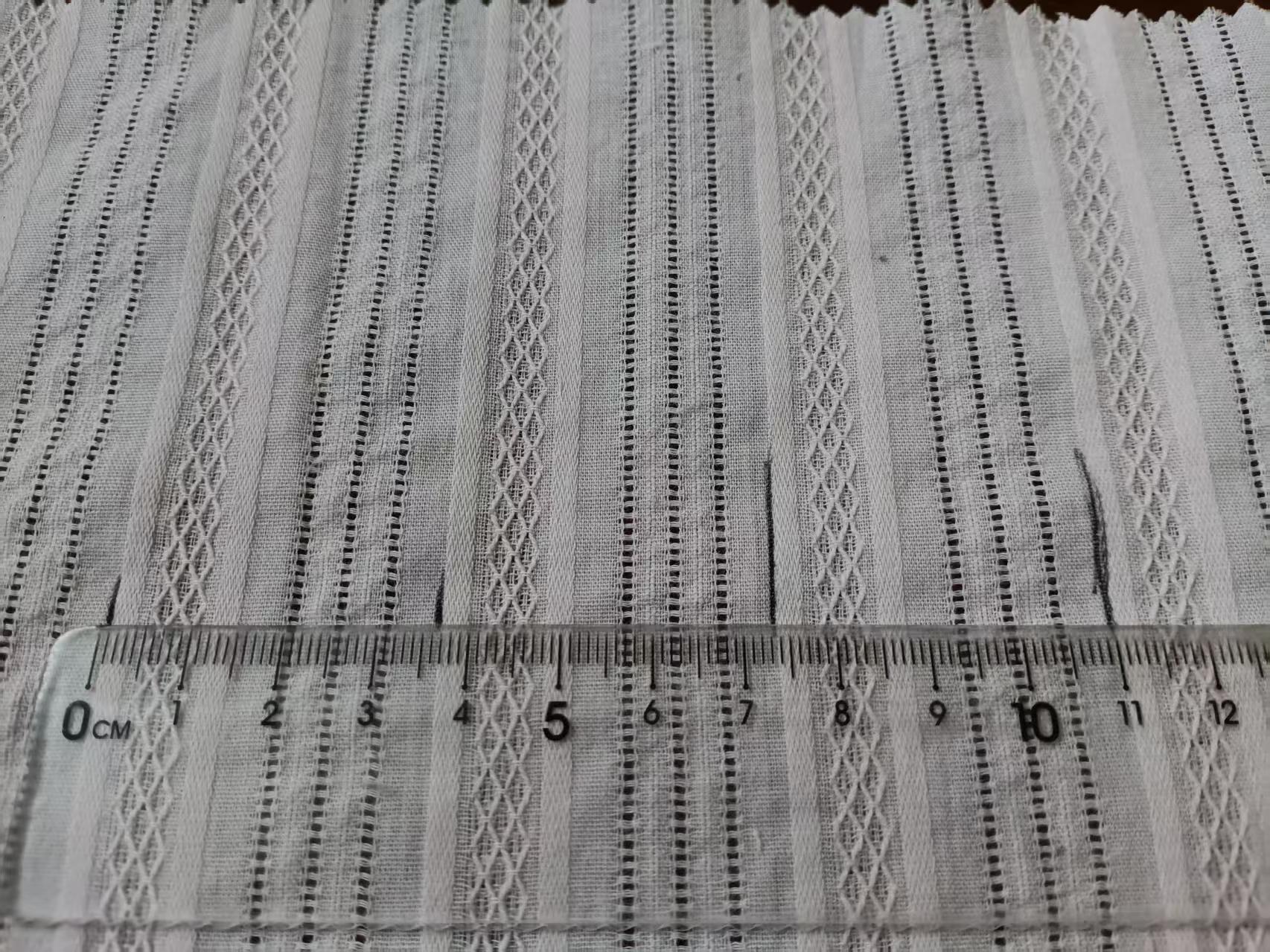
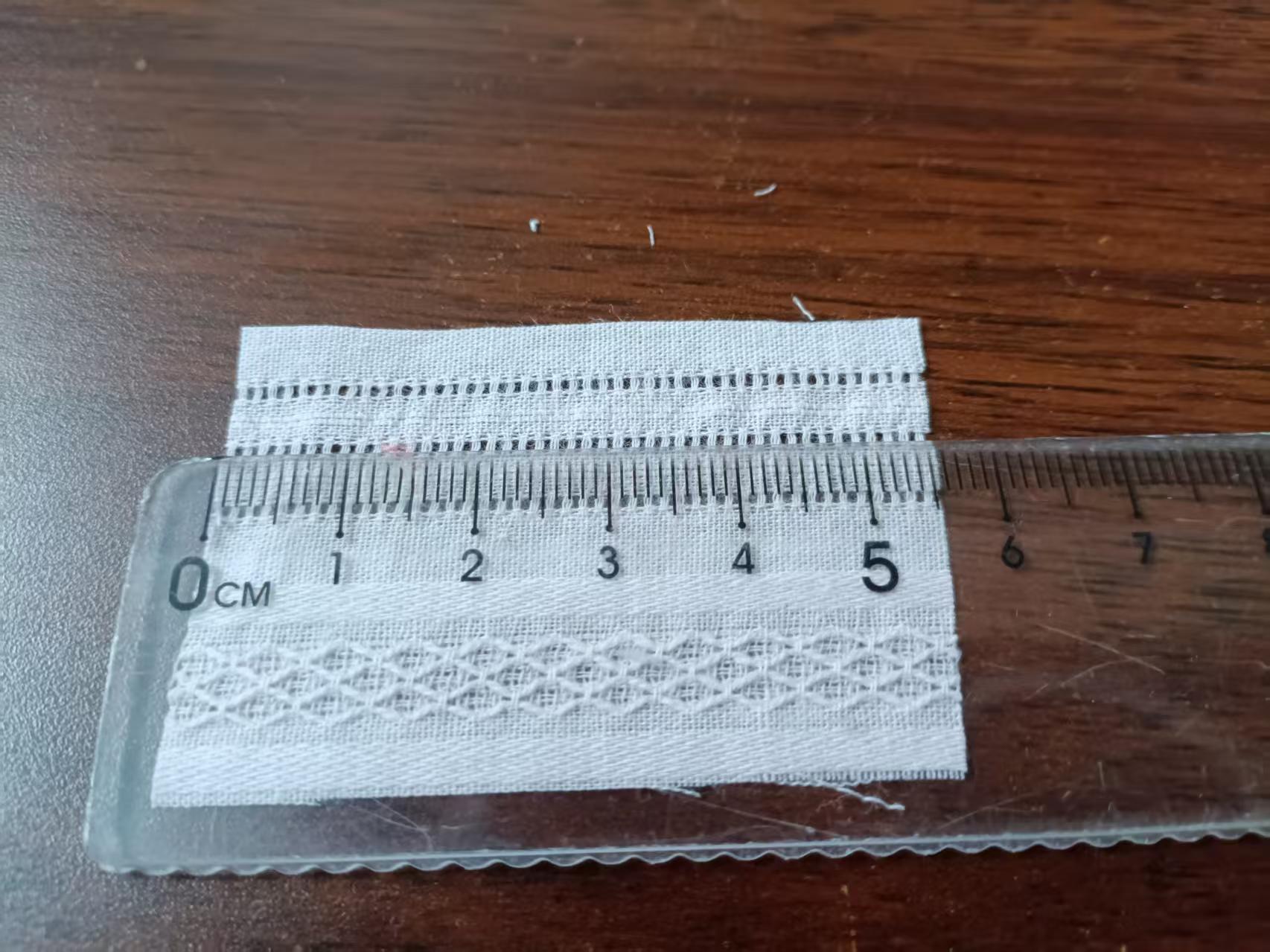
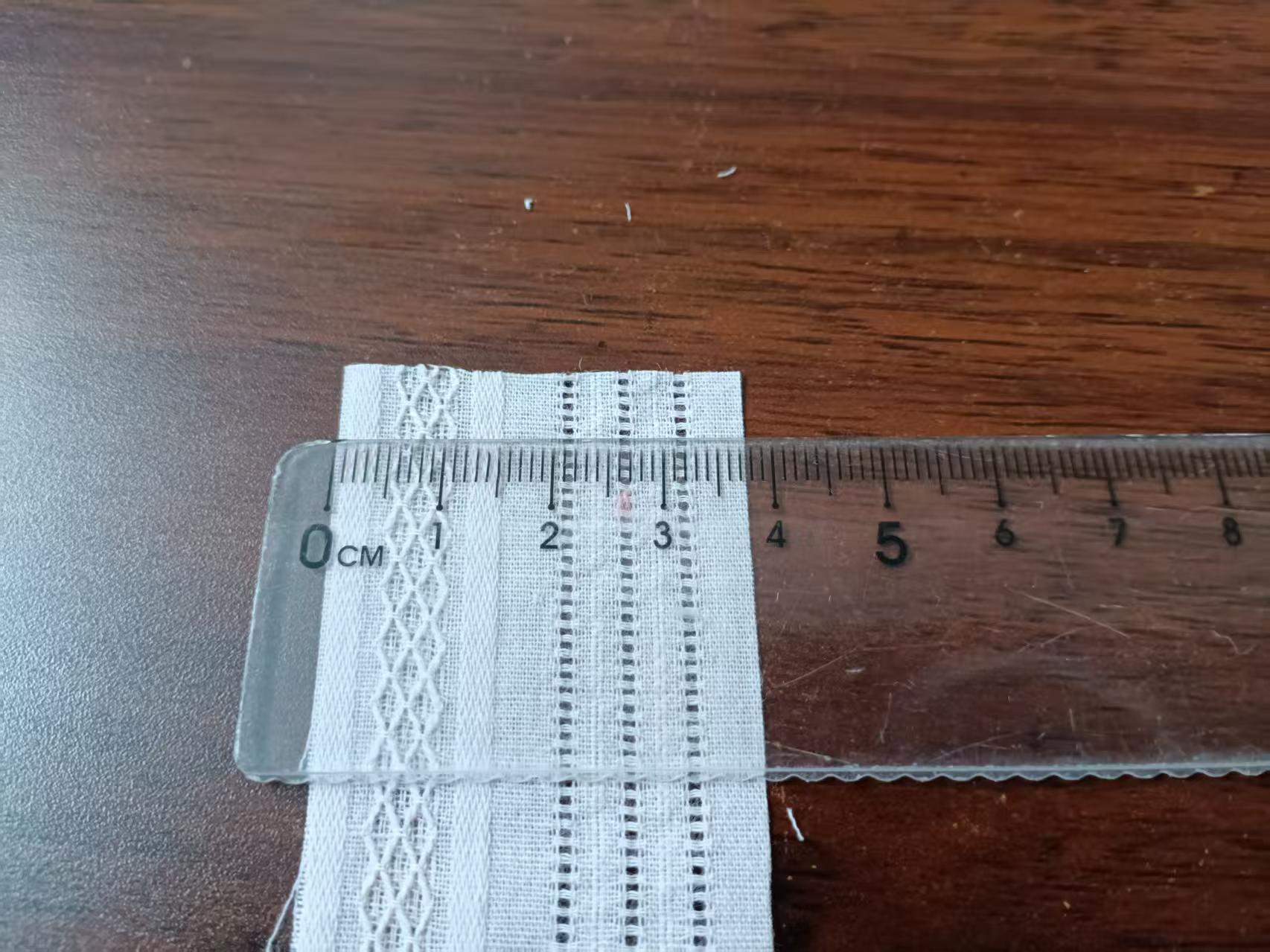
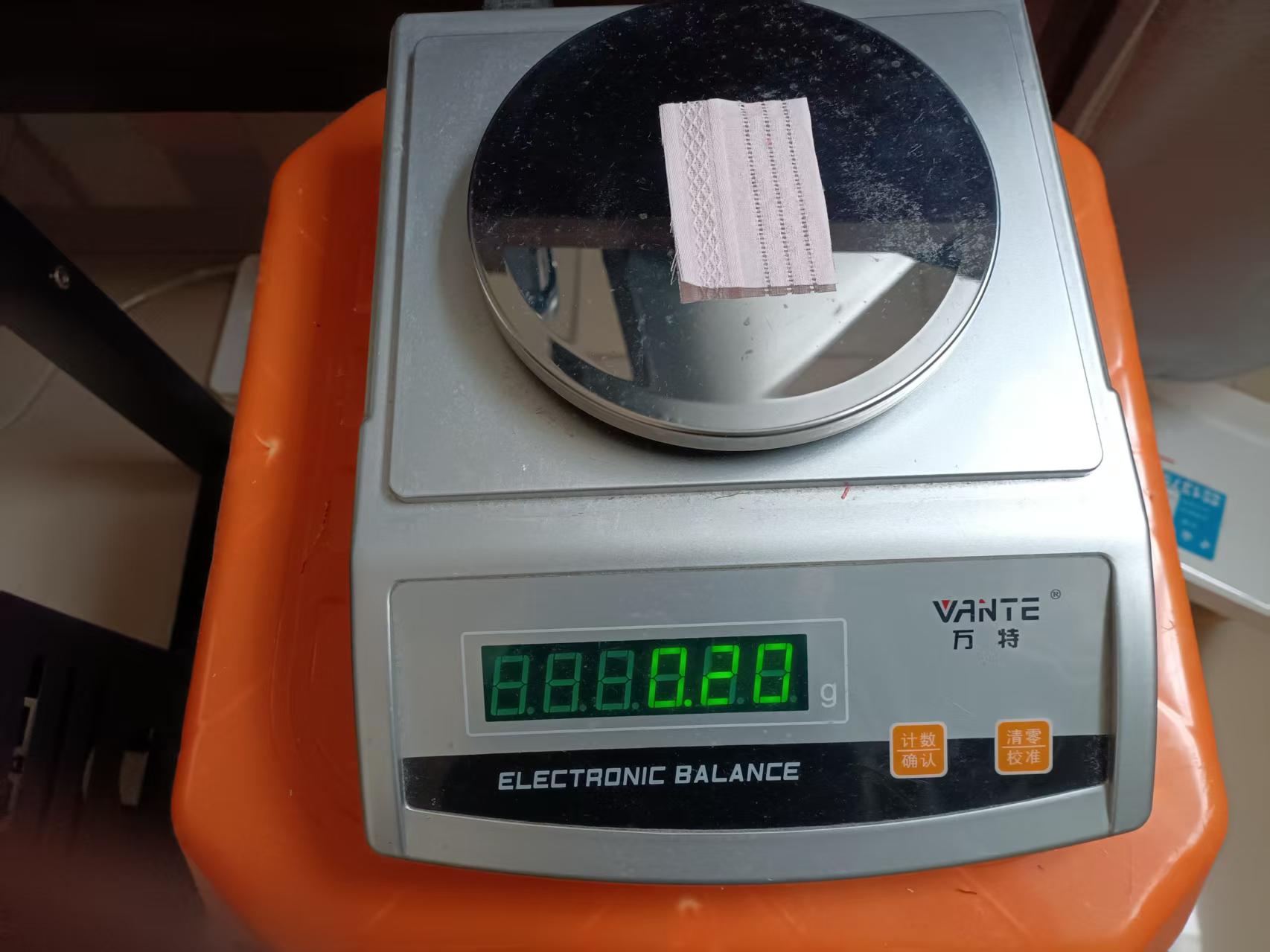
- Cut a sample that contains a complete pattern repeat.
- Measure length and width, e.g.:
- Length: 5.5 cm
- Width: 3.65 cm
- Weigh the sample; assume weight is 0.2 g.
- Calculate fabric GSM:
GSM = (Weight ÷ Length ÷ Width) × 10,000
Example result: 99 GSM.
🧴 IV. Step 2: Correct to Finished-State GSM
If the sample surface is fuzzy and lacks luster, it indicates a “semi-finished” (un-mercerized) fabric. Deduct about 5% GSM to simulate the finished (mercerized) state.
Finished GSM = Measured GSM ÷ 1.05
Example: 99 ÷ 1.05 ≈ 94 GSM
✨ Differences: Finished vs. Semi-finished
| Item | Semi-finished (Un-mercerized) | Finished (After Mercerization) |
|---|---|---|
| Surface fuzz | More; rough | Less; smooth |
| Luster | Dull | Bright; silky |
| Hand feel | Dry | Soft and smooth |
| Dyeing effect | Less vivid | Bright and vivid |
| Weight change | Original value higher | Approx. 5% reduction |
🪡 V. Step 3: Count Warp & Weft Repeats (Fig. 9 & 11)
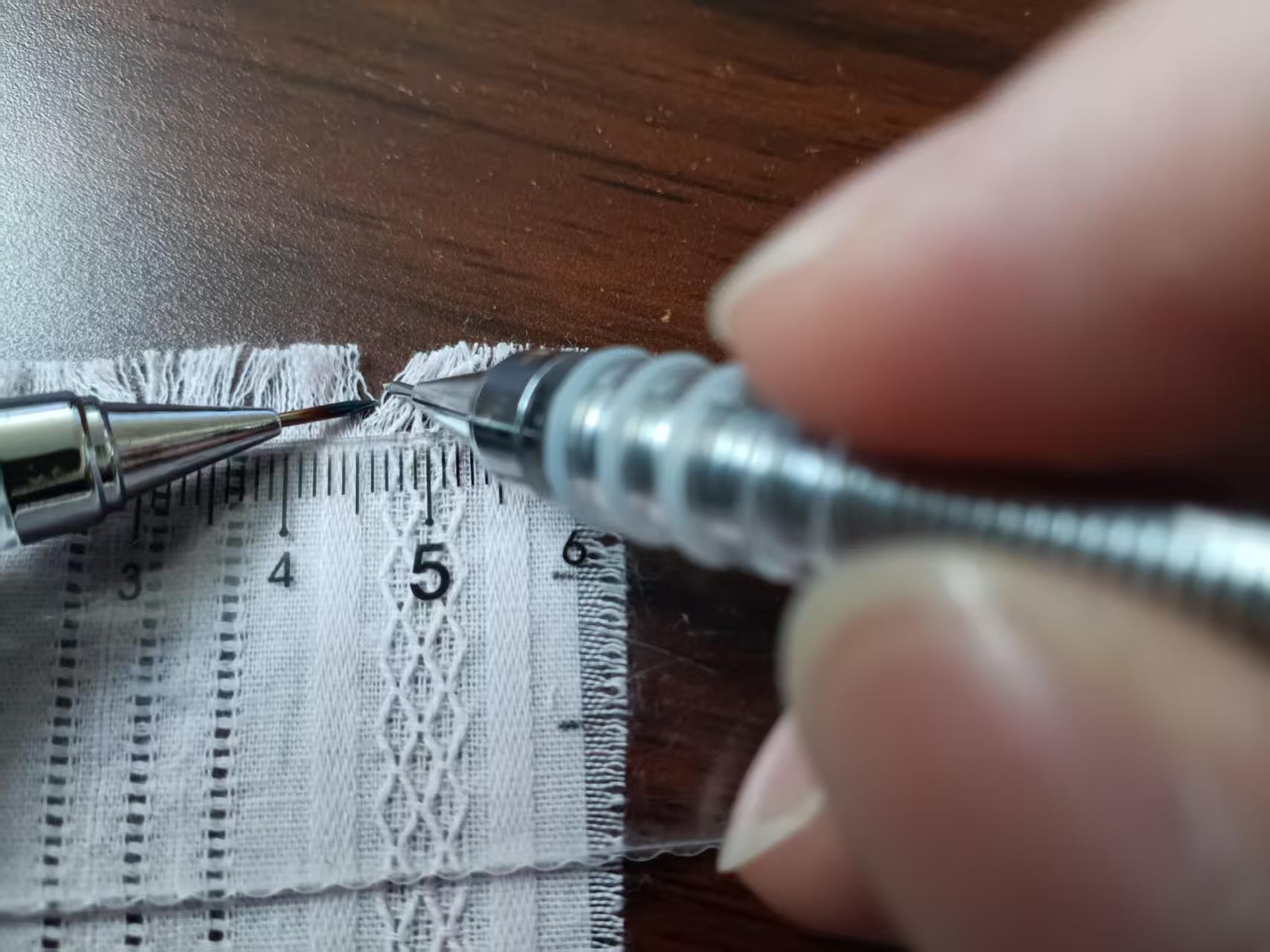
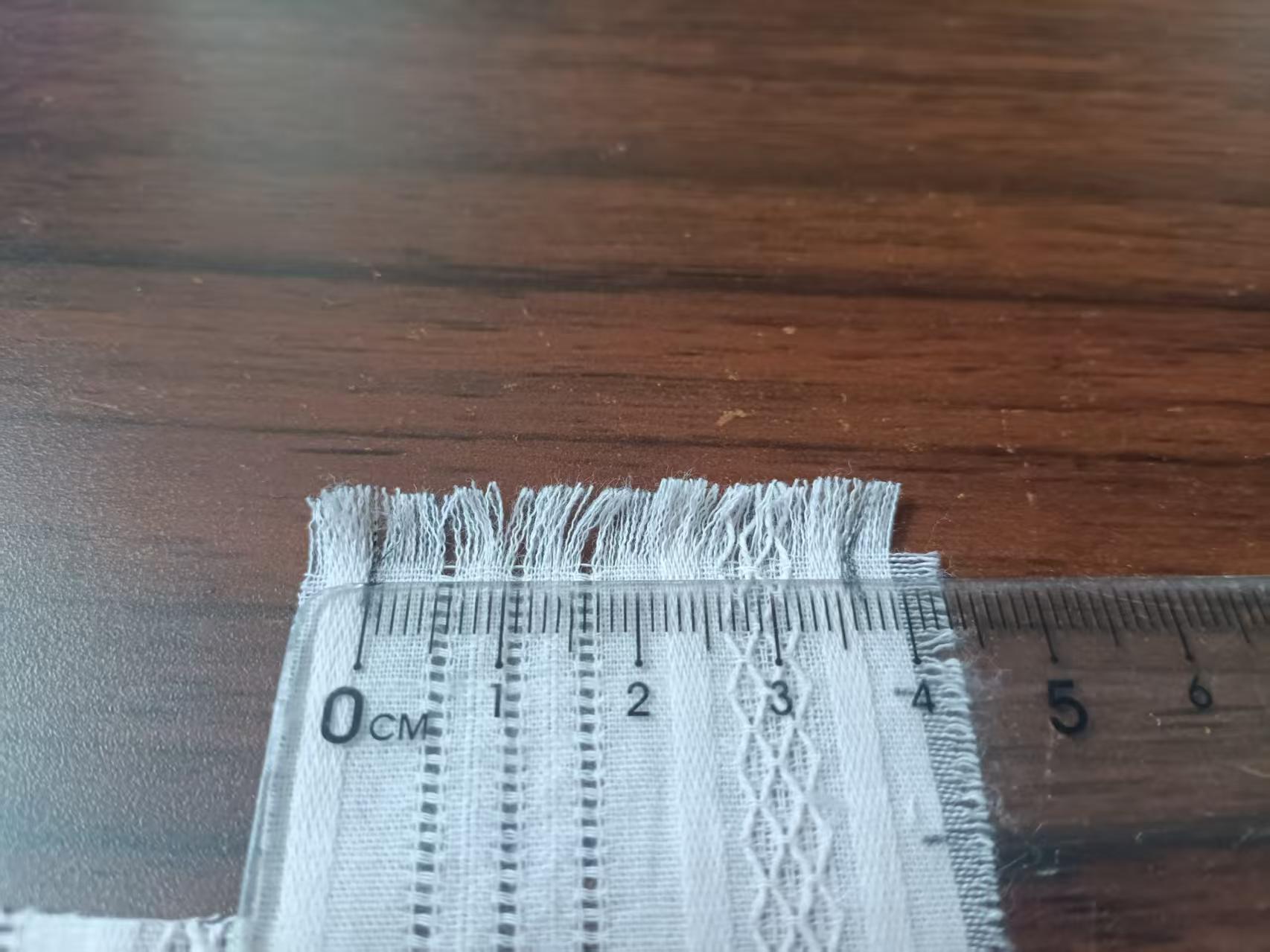
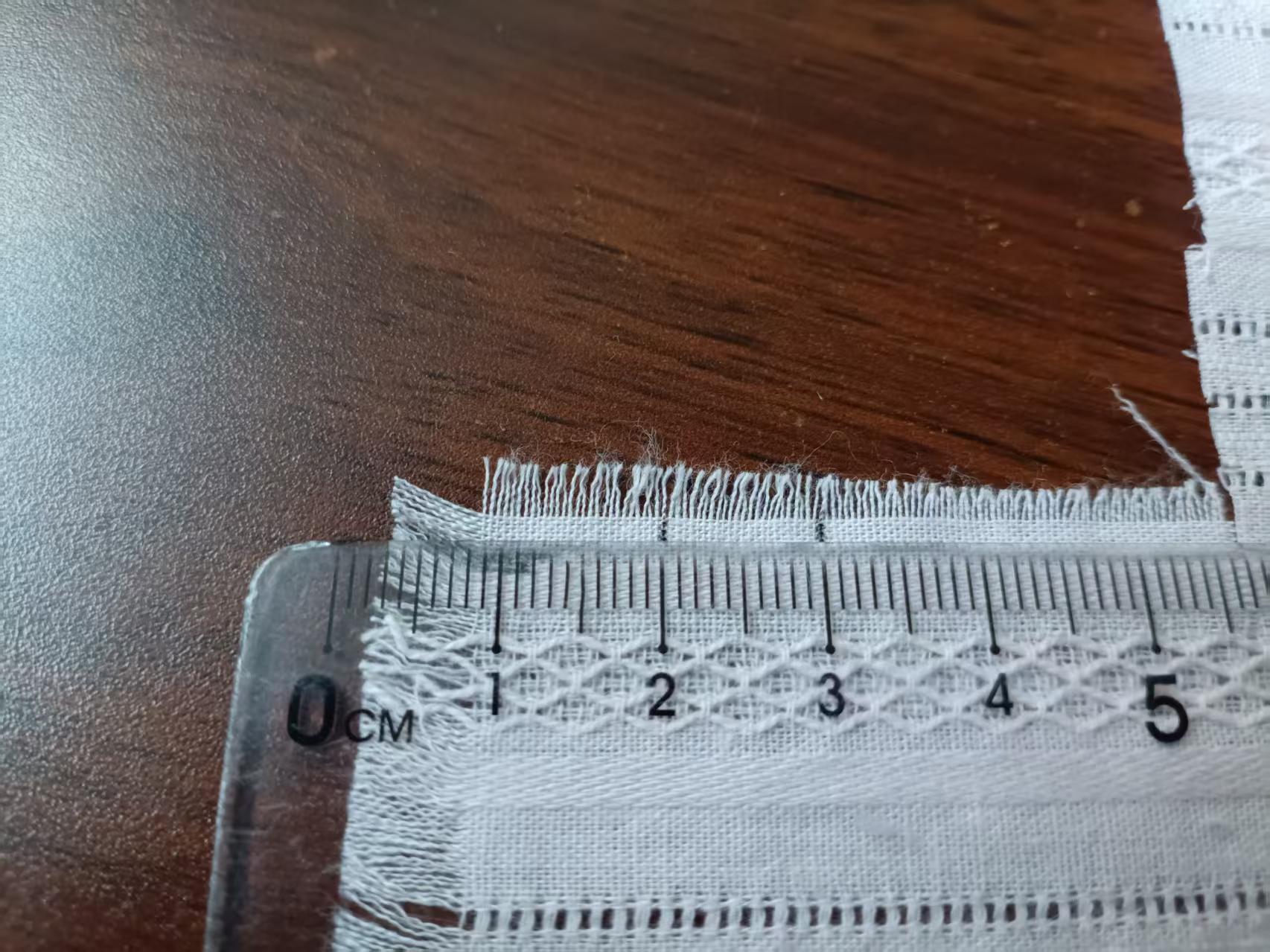
- Cut a section containing a complete repeat.
- Remove part of the weft to fully expose the warp.
- Count warp ends one by one with needles:
- Warp repeat length: 3.65 cm
- Single yarns: 138 ends
- Double yarns: 4 ends
- Count weft density within 1 cm:
- Single yarns: approx. 25 ends/cm
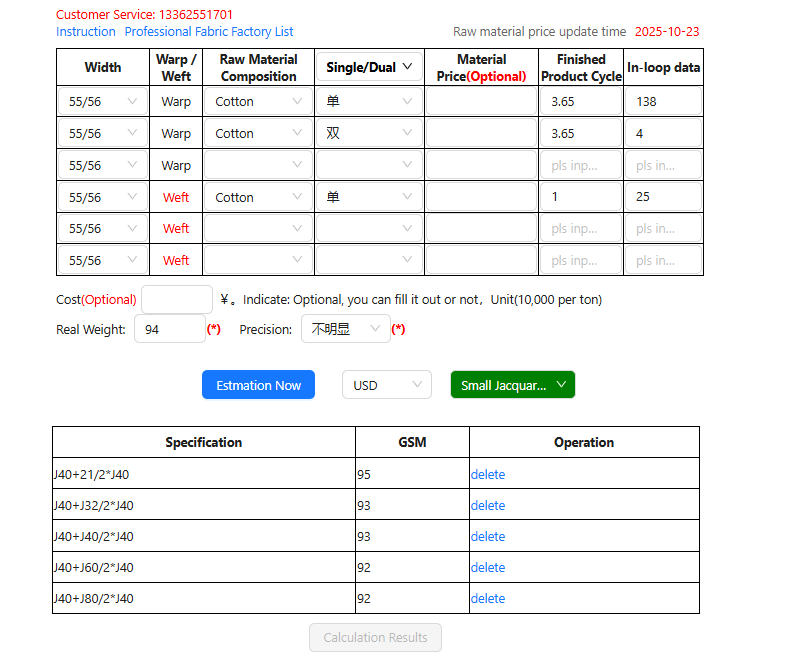
💻 VI. Step 4: Enter Data into the Calculator
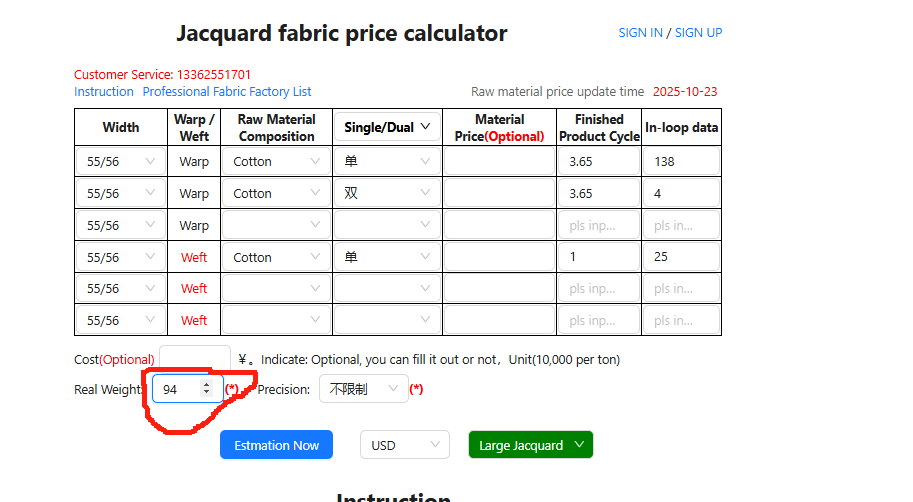
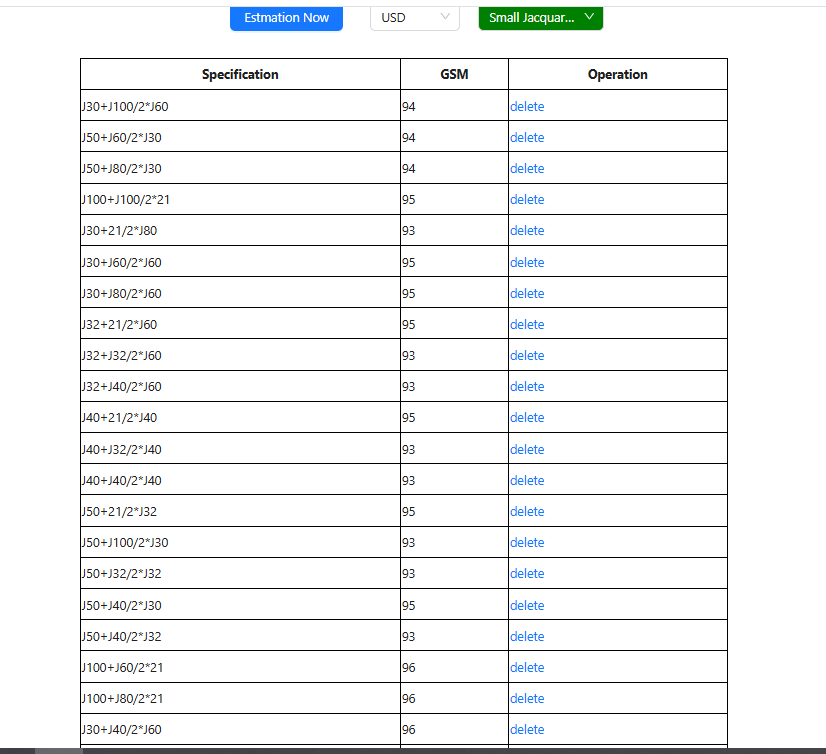
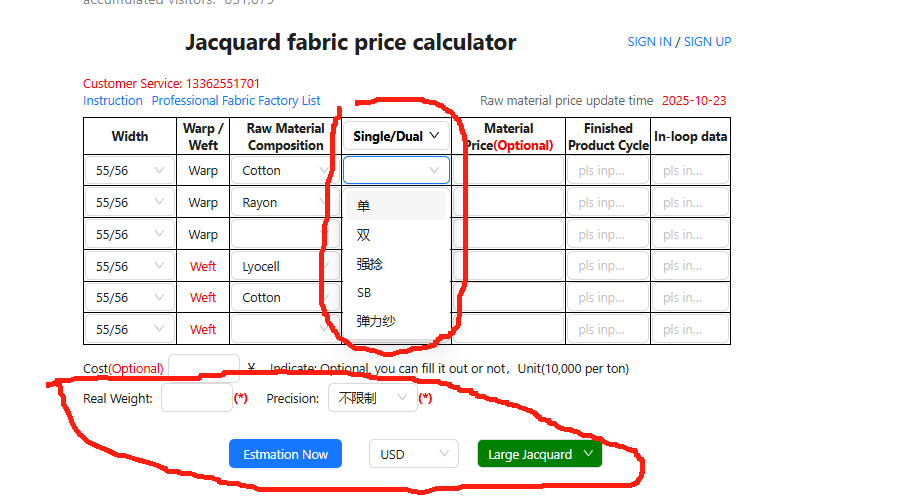
Open the Jacquard Fabric Price Calculator and fill in the following parameters in order:
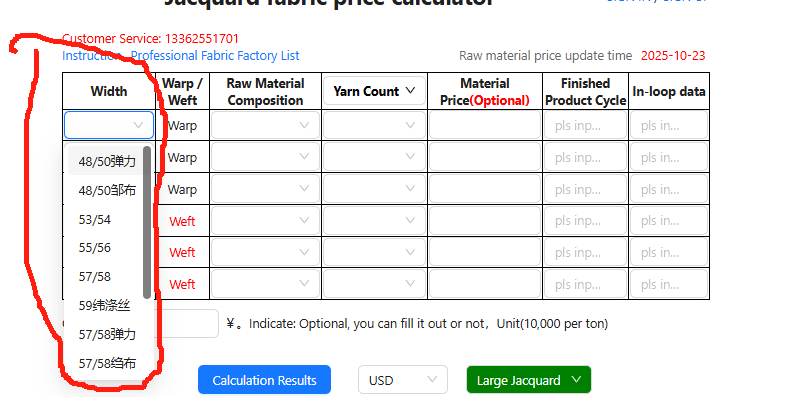
1️⃣ Width
Select the width matching your sample (in inches), e.g., 55/56 inch.
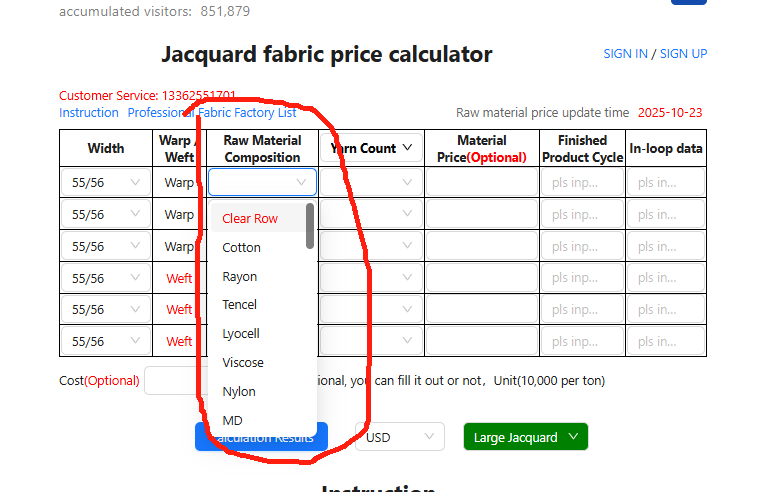
2️⃣ Raw Material Composition
Choose the fabric material from the dropdown (Cotton / Rayon / Tencel / Lyocell, etc.).
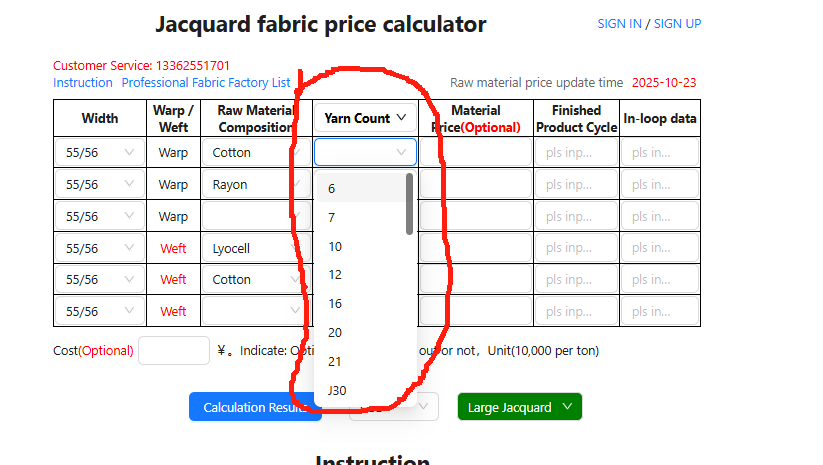
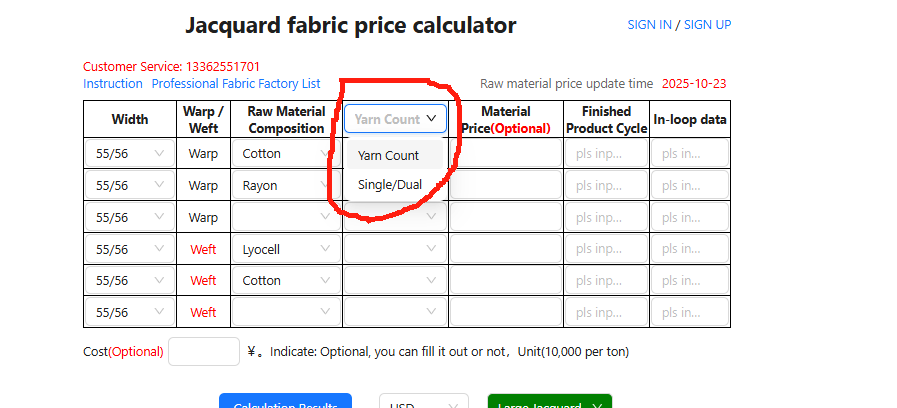
3️⃣ Single / Dual (Yarn Structure)
Fill out according to actual observation:
- Warp single → Single
- Warp double → Dual
- Weft single → Single
4️⃣ Finished Product Cycle & In-loop Data
- Warp cycle: 3.65 cm
- Weft cycle: 1 cm
- Warp single: 138 ends
- Warp double: 4 ends
- Weft single: 25 ends
5️⃣ Real Weight (GSM)
Enter the finished-state GSM corrected in Step 2: 94 GSM.
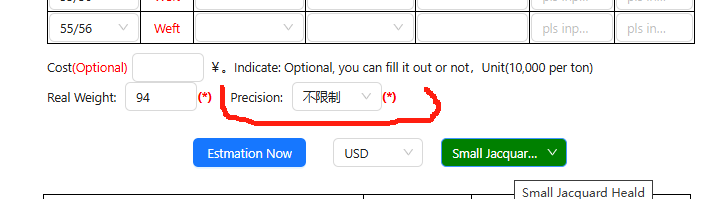
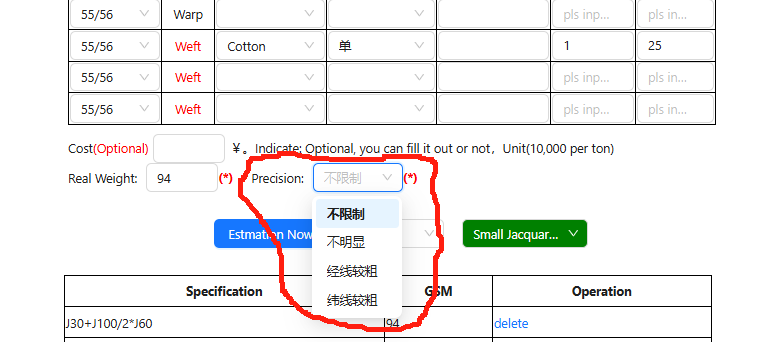
6️⃣ Precision
“Pull out one single yarn from both warp and weft, hold both taut and compare. Choose based on whether a visible thickness difference exists.”
- Unlimited: show all results
- Not obvious: warp ≈ weft in thickness (recommended)
- Warp thicker / Weft thicker: choose based on visual judgment
7️⃣ Click “Estimation Now”
The system will automatically generate multiple yarn combinations (e.g., J40 + J60/2 * J40).
👁️🗨️ VII. Step 5: Visually Filter the Closest Combinations
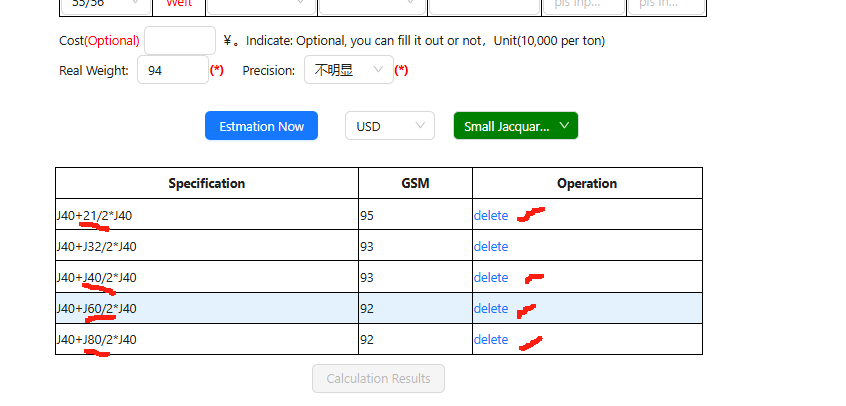
Tip: After selecting the matching combination, click “Calculation Results” to view the final output page.
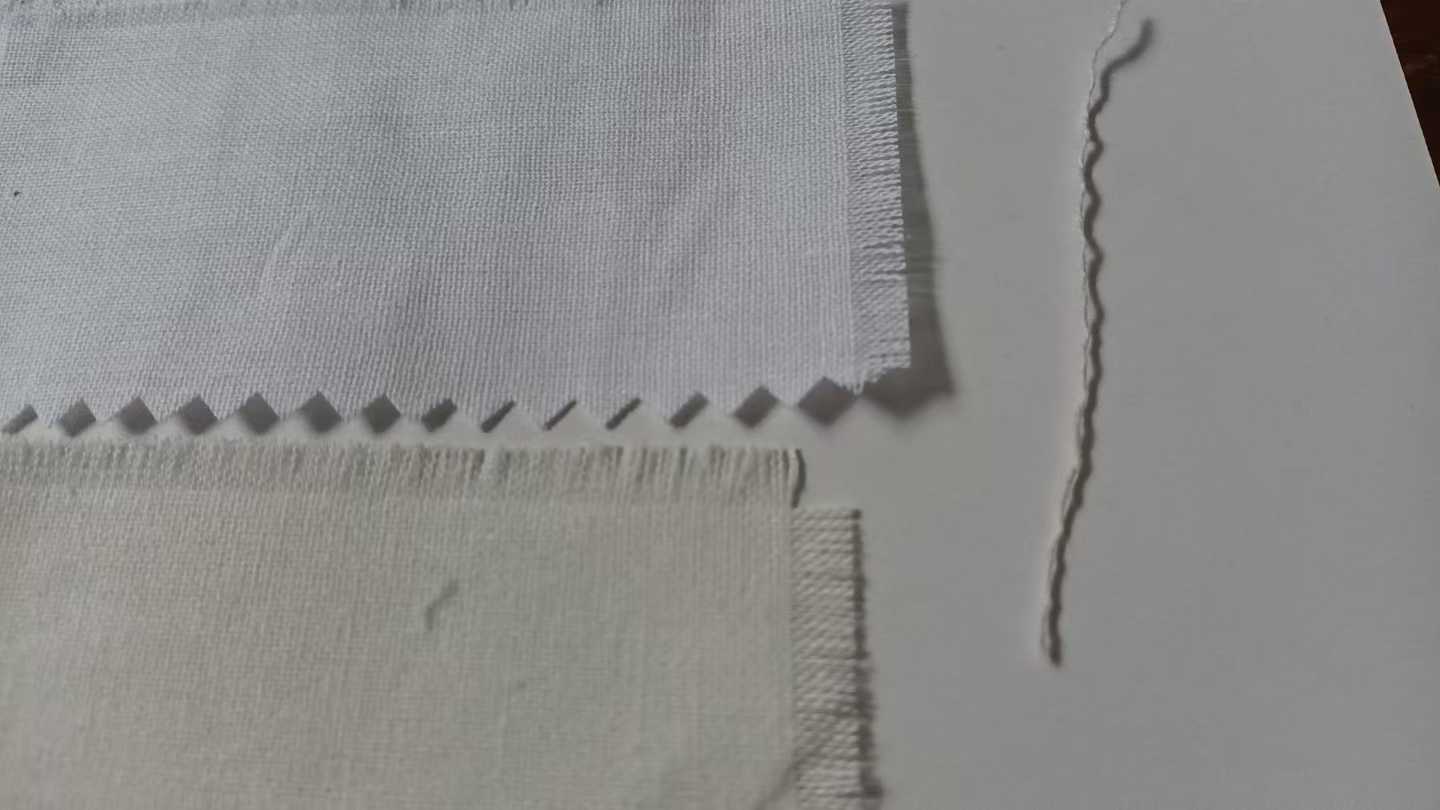
- Use standard yarn cards (16s–100s) to compare the double yarns pulled from the sample.
- Eliminate combinations that are clearly too coarse or too fine.
- Keep the 2–3 closest matching results.
📊 VIII. Step 6: Calculate & Output (Fig. 27 & 30)
- Click Calculation Results.
- The system will generate the following results:
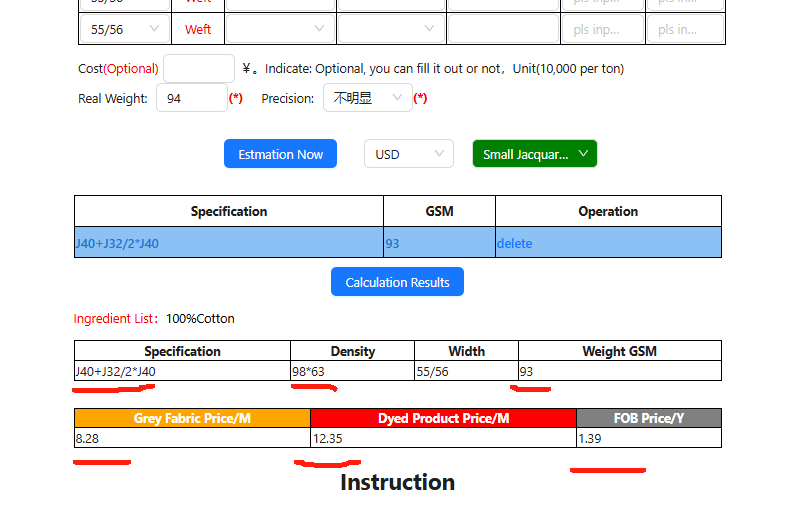
Specification: J40 + J32/2*J40
Density: 98 × 63
Width: 55/56
GSM: 95
Grey Fabric Price/M: ¥8.28
Dyed Product Price/M: ¥12.35
FOB Price/Y: ¥1.39
🤖 IX. Notes on the AI Logic
Based on the entered repeat data, yarn structure, GSM, and precision filter, the system matches against its database to reverse-deduce reasonable yarn combinations and price ranges.
- Finished-state judgment: if the surface is smooth and clean → Finished; otherwise → Semi-finished (apply
GSM × 0.95). - Filtering logic:
If warp ≈ weft thickness → Not obvious If warp thicker → Warp thicker If weft thicker → Weft thicker - Output priority: Highest precision → Closest GSM → Material consistency.
🗂️ X. Image Index
| No. | Description |
|---|---|
| Fig. 1–4 | Sample cutting & weighing |
| Fig. 9 & 11 | Counting warp/weft repeats |
| Fig. 24–25 | Yarn comparison reference |
| Fig. 27 & 30 | Calculation results output |
| Fig. 40–45 | System interface |
✅ XI. Summary
By following this workflow, even without known weaving data, you can quickly obtain via measurements and system calculations:
- Yarn structure (warp & weft specifications)
- Density and GSM
- Grey price, dyed price, and FOB export price
This process is especially useful for sample development, cost estimation, and client quotation analysis. Combined with AI assistance, it enables fast reverse calculation and automatic pricing for fabrics.